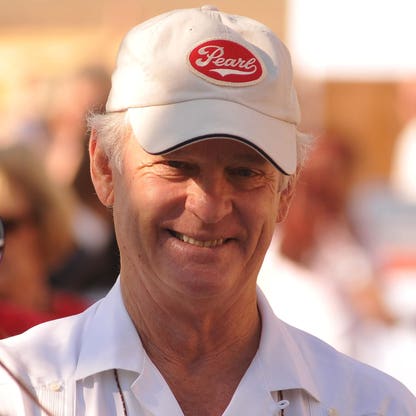
Christopher Goldsbury: The $1.1 Billion Salsa Empire Sale and Beyond
In the pantheon of American business moguls, few stories blend humble beginnings with a spectacular exit quite like that of Christopher Goldsbury. Often referred to as "Kit," Goldsbury's journey from a production line worker to a billionaire, culminating in the sale of Pace Foods for a staggering $1.1 billion, is a testament to shrewd business acumen, strategic timing, and an innate understanding of the consumer market. His remarkable financial achievements have cemented his place as a prominent figure, making the topic of christopher goldsbury net worth a subject of considerable interest and inspiration.
As of March 2013, Forbes estimated Christopher Goldsbury's net worth at an impressive $1.35 billion, placing him 345th on the "Forbes 400" list and 1088th among the world's billionaires. But how did a man who started cutting vegetables in a salsa factory achieve such monumental wealth? The answer lies in a captivating narrative of marriage, ambition, a significant divorce, and an unparalleled knack for turning a family business into a national powerhouse.
From Production Line to Presidential Suite: The Rise of a Salsa Baron
Christopher Goldsbury's entry into the world of Pace Foods was an organic one, rooted in family ties. In 1967, he married Linda Pace Carter, the daughter of David Pace, the visionary founder of the Pace Salsa factory. Two years later, in 1969, Goldsbury rolled up his sleeves and joined the company, not in an executive office, but on the factory floor. He immersed himself in the nitty-gritty of the business, literally cutting vegetables and meticulously crafting the picante sauce from scratch. This hands-on experience provided him with an invaluable understanding of the product, its production, and the intricate details that contribute to its quality and appeal.
His dedication and operational insights quickly propelled him through the ranks. By 1977, a mere eight years after joining the company, Christopher Goldsbury was appointed President of Pace Foods. This elevation marked a pivotal moment, signaling his growing influence and leadership within the organization. Under his stewardship, Pace Salsa began to expand its footprint, moving beyond its regional stronghold to capture a larger share of the burgeoning American market.
The next major step in his journey came in 1982 when Christopher and Linda Goldsbury made a strategic move to secure complete control of the company. They successfully bought out the remaining family shares, making Pace Foods entirely their own. This consolidation allowed them to steer the company with singular vision, focusing on growth and market dominance. For a deeper dive into his career trajectory and the milestones that defined his early success, explore From Salsa Line to Billionaire: Christopher Goldsbury's Success Story.
The Billion-Dollar Bet: Acquiring and Selling a Salsa Empire
The path to becoming a billionaire is rarely straightforward, and Christopher Goldsbury's story is no exception. A significant turning point, both personally and professionally, arrived in 1987 with his divorce from Linda Pace. This event presented a critical juncture for the ownership of Pace Foods.
In a bold and ultimately brilliant move, Goldsbury purchased Linda's half of the business for $95 million. At the time, this was a substantial sum, but in hindsight, it proved to be one of the most astute investments of his career. Having full control, Goldsbury unleashed his entrepreneurial spirit, driving Pace Foods into an era of unprecedented growth. Over the next decade, he aggressively expanded the company's reach, transforming it from a successful regional player into a national and even international brand. Pace Salsa became a household name, synonymous with quality and flavor.
The pinnacle of Christopher Goldsbury's business career arrived in 1996. After years of relentless expansion and market penetration, he made the strategic decision to sell the entire privately-owned Pace Foods outfit to the Campbell Soup Company. The sale price? A breathtaking $1.1 billion. This monumental transaction not only solidified christopher goldsbury net worth but also etched his name into the annals of American business history. It demonstrated a profound understanding of market dynamics, an unwavering belief in his product, and the courage to make high-stakes decisions that paid off handsomely.
Key Business Insight: Valuation and Exit Strategy
Goldsbury's decision to buy out his ex-wife's share for $95 million and then sell the entire company for $1.1 billion just nine years later exemplifies masterful valuation and exit strategy. It highlights:
- Long-Term Vision: He saw the immense potential for growth beyond the current valuation.
- Strategic Investment: Buying out the shares, though costly, gave him complete control to implement his expansion plans without internal disagreements.
- Market Timing: Selling to Campbell Soup, a major food conglomerate, at the height of the brand's national penetration maximized the sale price.
Beyond Salsa: Silver Ventures and Philanthropic Endeavors
For many, selling a company for over a billion dollars might signal retirement. But for Christopher Goldsbury, it marked a new beginning. He returned to the food industry, not as an operator of a single brand, but as an investor and developer through his private equity firm, Silver Ventures. This venture diversified his portfolio and allowed him to apply his business acumen to a broader range of enterprises.
Silver Ventures has made significant investments, including a notable stake in NatureSweet, a leading producer of greenhouse-grown tomatoes. Goldsbury also continued his trend of successful exits; in 2009, he sold Ecce Panis, an artisanal bread maker, back to Campbell Soup for a reported $65 million. These investments and sales demonstrate his continued prowess in identifying market opportunities and building value.
Beyond his investment activities, Christopher Goldsbury has become a transformative philanthropic force, particularly in his hometown of San Antonio, Texas. In 2007, he made a record-setting $35 million donation to the Culinary Institute of America (CIA). This generous gift was accompanied by a visionary proposal: he convinced the CIA to establish a campus at the site of the former Pearl Brewery in San Antonio. This historic property, acquired by Silver Ventures in 2001, has since undergone a remarkable revitalization. The Pearl district is now a vibrant, mixed-use development featuring restaurants, shops, residences, and the acclaimed CIA campus, becoming a cultural and culinary hub that has significantly contributed to San Antonio's urban renewal.
Goldsbury's involvement with the Pearl Brewery project is a prime example of impact investing, where financial returns are sought alongside positive social and environmental outcomes. It underscores how his wealth, fueled by the Pace sale, has been channeled into community development and educational initiatives. To learn more about his strategic investments and community projects post-Pace, read Silver Ventures: Christopher Goldsbury's Post-Pace Business Strategy.
Lessons from a Salsa Mogul: Building Lasting Value
Christopher Goldsbury's career offers several invaluable lessons for aspiring entrepreneurs and seasoned business leaders alike:
- Get Your Hands Dirty: His early experience on the production line gave him an unparalleled understanding of the product and operations, which is crucial for authentic leadership.
- Strategic Acquisition & Control: The decision to buy out family shares, and later his wife's share, allowed for unified vision and rapid execution of expansion plans. Control is key for implementing ambitious strategies.
- Value Creation Beyond Product: Goldsbury didn't just sell salsa; he built a brand, expanded its market reach, and created immense enterprise value that commanded a premium during the sale.
- Diversification and Impact Investing: Post-Pace, his move into private equity with Silver Ventures shows a smart diversification strategy. His investment in the Pearl Brewery demonstrates how wealth can be leveraged for significant community impact, combining financial returns with urban revitalization.
- Philanthropy as a Legacy: His substantial donation to the CIA and the subsequent development of the Pearl campus illustrate a commitment to giving back and fostering future talent.
Conclusion
Christopher Goldsbury's journey from a salsa factory floor to a billionaire's status is an compelling narrative of vision, determination, and strategic genius. The sale of Pace Foods for $1.1 billion fundamentally shaped christopher goldsbury net worth and allowed him to transition into a new phase of investment and philanthropy. Through Silver Ventures and his transformative work in San Antonio's Pearl district, he continues to demonstrate how immense wealth, once accumulated, can be reinvested to foster innovation, create jobs, and revitalize communities. His legacy is not just about the billions he made, but the lasting value he has created, both in the market and in the heart of his community.